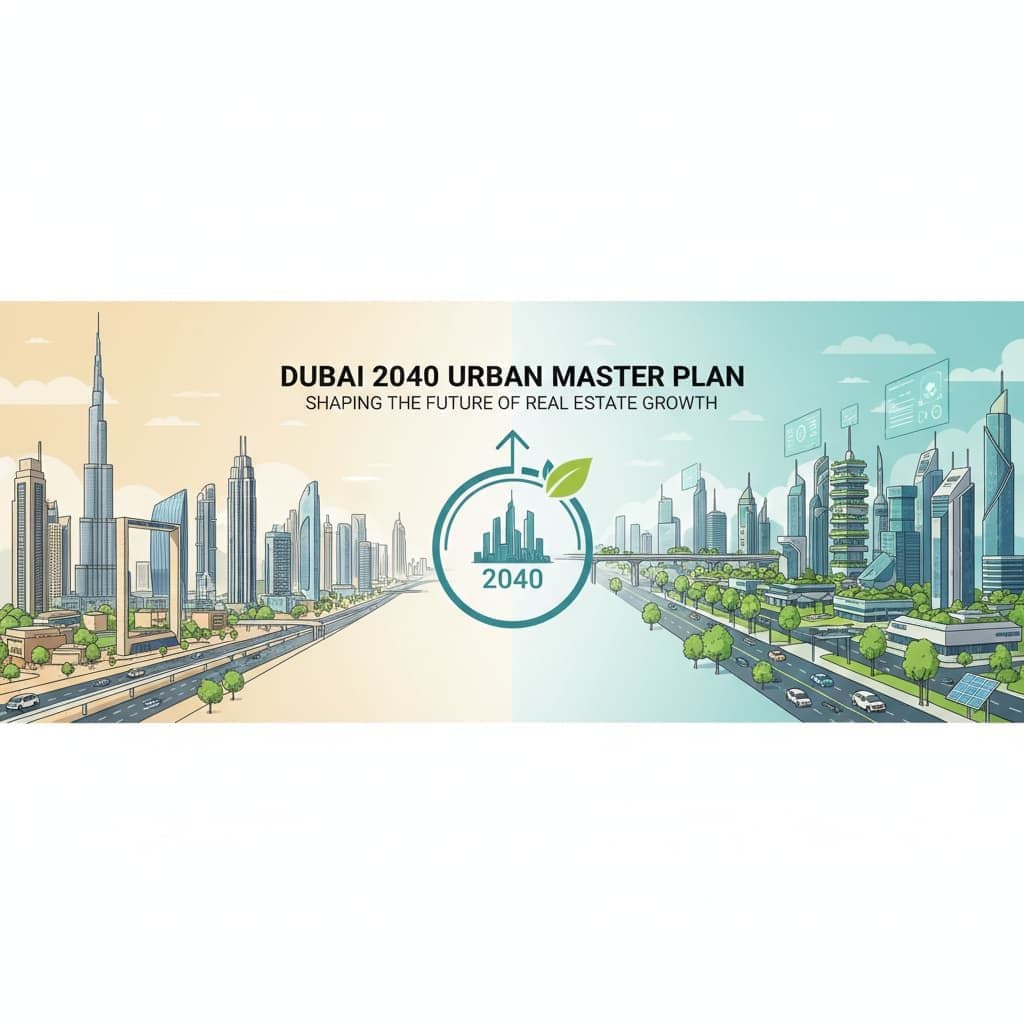
Dubai 2040 Urban Master Plan: Shaping the Future of Dubai Real Estate Growth
 January 15, 2026
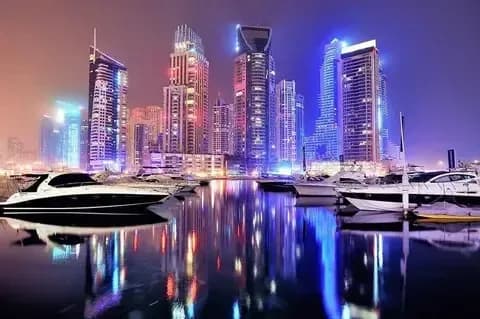
Dubai’s skyline has long been a global symbol of ambition and innovation. From artificial islands to master-planned communities, the emirate has turned desert and coastline into some of the most valuable real estate in the world. But as Dubai’s land resources become increasingly finite, the city is shifting its focus from acquiring “more land” to maximizing Dubai real estate growth through smarter urban planning, sustainable density, and infrastructure-led development. This transformation is at the heart of the Dubai 2040 Urban Master Plan, guiding how the city will accommodate population expansion, economic growth, and global ambitions in the decades ahead.
1. Understanding Dubai’s Growth Dynamics
For decades, Dubai’s real estate growth has been heavily dependent on land expansion. Projects like the Palm Jumeirah and Palm Jebel Ali turned water and desert into high-value property, giving the city a unique footprint and a strong international profile. However, large-scale reclamation and horizontal expansion have limitations: they are capital-intensive, environmentally sensitive, and inherently slower than urban densification strategies.
The Dubai 2040 Urban Master Plan acknowledges this shift. It signals that the city is entering a more mature phase where growth is measured not just in hectares but in value per square meter. This is a pivotal moment for Dubai real estate growth, as the emphasis moves toward optimizing existing assets and creating more liveable, transit-oriented urban spaces.
2. Population Growth as a Primary Driver
Dubai’s population is projected to rise dramatically over the next two decades. The 2040 Dubai master plan outlines a transition from around 3.3 million residents (2020 baseline) to a daytime population of 7.8 million by 2040. This growth trajectory has major implications for the city’s real estate sector, as demand for residential, commercial, and mixed-use properties increases.
The Dubai 2040 plan addresses population growth through:
- Higher density in existing neighborhoods, encouraging vertical development and regeneration.
- Redevelopment of older urban areas to unlock additional value.
- Expansion of transit-oriented and mixed-use zoning, ensuring accessibility and convenience for residents.
With an area of about 4,114 km², Dubai has the space to grow, but the Dubai 2040 Urban Master Plan emphasizes maximizing the utility of every square metre to support sustainable Dubai real estate growth.
3. Post-Land Bank Strategies for Dubai Real Estate
Dubai’s era of unlimited land development is evolving. The concept of a “land bank”, an inventory of developable plots, is no longer the primary growth lever. Instead, the city is pivoting toward strategies that extract more value from existing properties, with the following approaches:
- Densification and Redevelopment: Increasing building heights, introducing mixed-use towers, and regenerating older districts can create higher-value real estate without expanding the urban footprint.
- Transit-Oriented Development: Leveraging metro lines and mobility infrastructure encourages concentrated growth around transport hubs, reducing reliance on new roads and suburban expansion.
- Supply Cycle Management: Developers are focusing on phased delivery, absorption planning, and long-term yield products like leasing and REITs rather than one-time land sales.
- Economic Diversification: Growth is increasingly anchored in trade, finance, tourism, and digital sectors, areas that generate GDP without proportional land consumption.
This strategy forms the backbone of Dubai real estate growth in the era “after the land bank.”
4. Infrastructure as a Growth Catalyst
A critical component of the 2040 Dubai master plan is infrastructure investment. The expansion of the Dubai Metro, for example, illustrates how transportation can drive real estate growth without horizontal land development.
The Metro Blue Line, spanning 30 km with 14 stations, is a cornerstone of transit-oriented planning. By increasing accessibility, the city can:
- Promote higher floor-area ratios around stations.
- Encourage redevelopment of existing neighborhoods.
- Reduce dependency on peripheral expansions.
The Dubai 2040 Urban Master Plan emphasizes a city that grows vertically and functionally, creating opportunities for developers to generate higher returns on existing plots while improving quality of life for residents.
Discover: Latest projects in ORA
5. Economic Vision Beyond Land
Dubai’s economic strategy complements the urban master plan. The Dubai Economic Agenda D33 sets ambitious targets, including AED 32 trillion in economic output over 10 years and doubling the emirate’s economy.
For Dubai real estate growth, this implies:
- Attracting regional headquarters and global talent.
- Building financial and digital infrastructure that supports investment.
- Expanding tourism and aviation capacity, generating platform revenues that extend beyond property transactions.
The focus is now on creating a city as a platform, where real estate is part of a broader economic ecosystem, rather than the sole driver of growth.
Discover:Latest Projects in AL WASL
6. Tourism and Aviation: Growth Without Land Expansion
Dubai’s visitor economy demonstrates how urban growth can occur without proportional land expansion. In 2024, the emirate welcomed 18.72 million international overnight visitors, a 9% increase from the previous year. Passenger traffic at Dubai International Airport reached 92.3 million, with operations expected to gradually shift to Al Maktoum International by 2032 to accommodate rising demand.
Tourism and aviation growth support Dubai real estate growth in ways that do not rely on new land parcels:
- Hotels and short-term rental properties capitalize on high visitor volumes.
- Service-oriented infrastructure creates opportunities for mixed-use developments.
- Urban experience and amenities drive property value without additional horizontal expansion.
These dynamics reinforce the Dubai 2040 Urban Master Plan’s focus on value per square metre over land acquisition.
Discover: Latest Projects in EMAAR beachfront
7. Key Highlights of the Dubai 2040 Urban Master Plan
The Dubai 2040 Urban Master Plan is designed as a comprehensive blueprint for sustainable urban growth. Some of its most notable goals include:
- Doubling green and recreational areas (+105%), promoting liveability.
- Ensuring 55% of residents live within 800 metres of a public transport station, facilitating transit-oriented development.
- Expanding allocation for education, healthcare, and community services.
- Encouraging high-density development and mixed-use zones in strategic areas.
These measures illustrate how Dubai real estate growth is shifting toward qualitative improvements rather than mere quantitative expansion.
Also read: The Rise of 'Branded Residences': Is the Premium Worth It?
8. Real Estate Market Implications
The 2040 Dubai master plan influences developers, investors, and homebuyers in multiple ways:
- Supply Phasing: Large housing supply surges, such as 210,000 units projected for 2025–2026, require careful absorption strategies to maintain price stability.
- Redevelopment Opportunities: Older neighborhoods become targets for regeneration, offering higher yields without expanding the city’s footprint.
- Wellness-Oriented Projects: Banks and investment funds increasingly favor projects that integrate sustainability, green spaces, and health-focused amenities.
- Luxury Waterfront and Iconic Projects: Selective reclamation continues, but only for strategic, premium developments like Palm Jebel Ali villas.
The Dubai 2040 plan ensures that real estate growth is balanced, sustainable, and economically diversified.
Also read: The Ultimate Guide to Living in Downtown Dubai
9. The Future of Dubai Real Estate Growth
As Dubai approaches the limits of its traditional land bank, the emirate is clearly redefining growth metrics. Developers are encouraged to focus on:
- Vertical expansion and densification, maximizing land value.
- Transit-oriented and mixed-use developments, reducing traffic congestion and enhancing livability.
- Economic platform growth, aligning real estate projects with tourism, finance, and digital initiatives.
- Selective land reclamation, prioritizing strategic, high-value locations.
This strategic shift ensures that Dubai real estate growth remains robust even as physical land becomes scarcer, marking a new era where innovation, infrastructure, and urban design drive value more than acreage alone.
Also read: UAE Latest Trends in Real Estate Marketing
FAQs
What does “after the land bank” mean for Dubai?
It refers to a phase where horizontal expansion is limited, and real estate growth relies on densification, redevelopment, and infrastructure-led projects rather than creating new land.
How will the projected surge in housing units affect property prices?
Careful phasing and absorption management, as emphasized in the Dubai 2040 Urban Master Plan, aim to prevent oversupply and maintain price stability.
How does the Dubai 2040 Urban Master Plan address population growth?
Through high-density zones, transit-oriented development, and enhanced community facilities, the 2040 Dubai vision ensures residents are accommodated efficiently.
What role does the “D33” Economic Agenda play in real estate?
D33 drives economic diversification, attracting global talent, businesses, and tourism, key factors that increase demand for premium properties and support sustainable Dubai real estate growth.
Why are banks and funds increasingly interested in wellness-oriented projects?
Projects with green spaces, health amenities, and sustainable design align with global investment trends and attract long-term tenants, enhancing returns.
Will there be more projects like Palm Jumeirah in the future?
Reclamation will continue selectively, such as Palm Jebel Ali Villa For Sale opportunities, but the focus is on high-value, strategic locations rather than constant expansion.
Why is Dubai shifting focus to “value per square meter” instead of new land?
Scarce land, infrastructure maturity, and population growth necessitate maximizing returns on existing assets rather than acquiring more land, ensuring sustainable Dubai real estate growth.
Discover: Properties For Sale In Dubai